Campaigns Are Quietly Targeting the Loneliest Americans — and It's Changing Who Wins
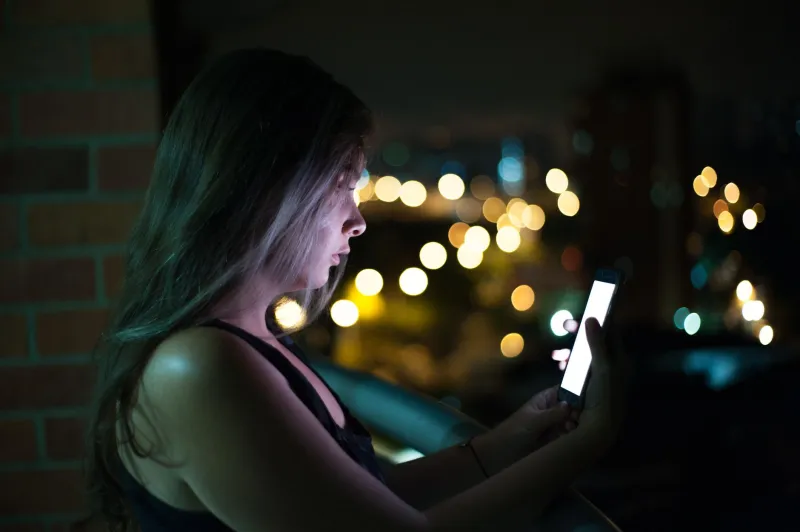
There's a version of American democracy that civics textbooks still love to describe — neighbors talking over fences, union halls buzzing before an election, church groups hashing out candidates over potluck dinners. That version is increasingly fiction. About 50% of Americans report measurable feelings of loneliness, according to a 2023 Surgeon General advisory that basically treated social isolation as a full-blown public health emergency. But here's the part that doesn't make it into the health headlines: that epidemic of disconnection is quietly reshaping who wins elections.
And some campaigns already know it.
The Lonely Voter Is a Different Kind of Voter
When political scientists talk about "social capital," they mean the web of community ties that shape how people process information and make decisions. People embedded in tight communities — religious groups, neighborhood associations, even just a solid friend group that talks politics — tend to have their opinions moderated by real human relationships. They hear pushback. They compromise. They update.
Socially isolated voters don't have that buffer. And in a media environment designed to maximize engagement through outrage, that matters enormously. A person who goes home to an empty apartment and doomscrolls for four hours is exposed to a fundamentally different political reality than someone who argued about the school board at a block party last weekend.
Researchers have started flagging this. A 2022 study published in the journal Political Psychology found that loneliness correlates with increased susceptibility to political extremism and conspiratorial thinking — not because lonely people are dumb, but because they're actively searching for community and meaning, and political movements are very good at providing both. The tribe fills the void.
The Algorithm Knows You're Alone
Here's where it gets uncomfortable. Social media platforms don't just passively reflect your loneliness — they actively exploit it. Meta's own internal research, which leaked in 2021, showed that its recommendation systems were more likely to serve divisive, emotionally charged content to users who engaged with fewer real-world social connections on the platform. Isolated users weren't just more likely to see extreme content; they were more likely to engage with it, share it, and build their entire political identity around it.
This creates a feedback loop that campaigns have learned to exploit. Digital ad targeting tools allow campaigns to reach people based on behavioral signals that, while not labeled "lonely," effectively identify them — late-night scrolling patterns, low social engagement metrics, heavy consumption of political content without the moderating effect of diverse follows. You're not being targeted because a campaign knows you're lonely. You're being targeted because the data portrait of a lonely person and the data portrait of a highly persuadable, emotionally activated voter look almost identical.
That's not a conspiracy theory. That's just how the math works.
Who's Messaging to the Disconnected — and How
Both parties do this, but they do it differently. On the right, the messaging has leaned heavily into what researchers call "negative partisanship" — the idea that you might not love your candidate, but you should be terrified of the other side. For someone who lacks a strong community identity, that fear-based framing is particularly sticky. It offers belonging through opposition: you're one of us because you hate what they stand for.
On the left, the pitch to isolated voters has often centered on identity affirmation — the idea that political engagement is a form of self-expression and community-building. "Come to our rally, join our Discord, volunteer for the cause." The movement becomes the social network. That's not cynical on its face, but it does mean that someone's entire social world can end up filtered through a single political lens, which isn't great for nuanced thinking regardless of which direction it leans.
What neither side is doing particularly well is actually addressing the underlying loneliness. That would require policy — investment in community infrastructure, mental health resources, urban planning that creates third spaces, labor policies that give people time to actually have a life outside of work. That stuff is slow, expensive, and hard to fit in a 30-second ad.
The Swing Voter Who Lives Alone
Electoral strategists have long obsessed over the mythical swing voter — that elusive centrist who could go either way. But there's a growing argument that the new swing voter isn't defined by ideology at all. It's defined by social disconnection. People without strong community ties are more volatile in their political preferences, more responsive to whoever reached them most recently, and more likely to either stay home or make a decision based on vibes rather than policy.
In close elections — and basically every major election these days is close — that volatility is decisive. A county where 15% of registered voters live alone and report low community engagement is a county where the right Facebook ad campaign in the final two weeks can genuinely flip the result. Campaigns know this. The targeting infrastructure exists. The question is just whether anyone's being honest about it.
What Actually Gets Fixed Here
Here's the uncomfortable policy reality: a democracy full of lonely, algorithmically isolated voters is not going to produce great governance. Lonely voters are easier to manipulate, more susceptible to misinformation, and more likely to support candidates who offer emotional validation over substantive plans. That's not a dig at lonely people — it's just human psychology operating in a broken information environment.
Fixing it would mean campaigns choosing not to exploit it, which is asking a lot. It would mean platform accountability, which Congress has failed to deliver on for nearly a decade. And it would mean investing in the kind of community infrastructure — libraries, parks, local journalism, affordable housing that puts people near each other — that has been systematically defunded for forty years.
None of that fits on a bumper sticker. But the next time you're watching election results come in from some county you've never heard of and wondering how that happened, it's worth asking: how many of those voters made that decision completely alone, in the dark, with only their phone for company?
Because someone was betting on exactly that.