City Council Is the New Congress: How Your Block's Politics Got Loud
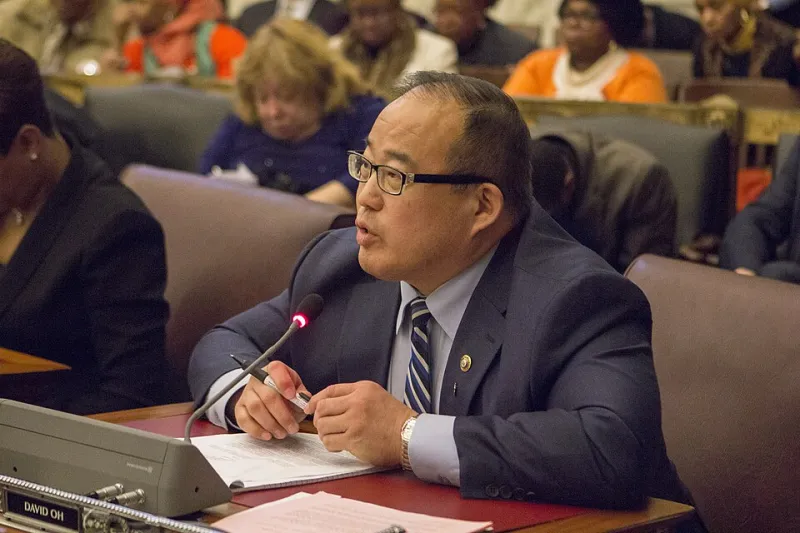
Photo: Philadelphia City Council, Public domain, via Wikimedia Commons
Not that long ago, running for city council meant putting up some yard signs, knocking on a few hundred doors, and hoping the three people who actually showed up to the community meeting liked your vibe. The stakes felt small. The drama was minimal. The average voter couldn't have picked their councilmember out of a lineup.
That era is over.
Local elections have quietly become the loudest, messiest, most consequential political arena in the country — and a whole generation of voters is only just now realizing it.
From Snooze-Fest to Battleground
Here's the thing nobody really talks about in presidential election years: the decisions that actually touch your daily life almost never come from Washington. Your rent going up? That's a zoning decision made at city hall. Your neighborhood getting a new bus line — or losing one? Local transit board. The reason your block has three coffee shops and no affordable grocery store? Planning commission. The fact that your school district is cutting art programs while the football field gets new turf? School board.
National politics dominates the conversation because it's louder and more entertaining, but local government is where policy becomes pavement. Literally.
And now, national political movements have figured that out too.
Conservative and progressive organizations alike have started funneling serious money and organizing infrastructure into city council races, school board elections, and mayoral contests that would have been afterthoughts five years ago. What used to cost a candidate $15,000 to win is now drawing six-figure outside spending in mid-sized cities. The ideological wars that used to play out on cable news are now playing out in community centers and neighborhood Facebook groups — and increasingly, on TikTok.
The TikTok Organizer Effect
If you want to understand how local politics changed, watch what happened in a handful of city council races over the last two election cycles. Young organizers — many of them first-time candidates or campaign volunteers — started treating hyperlocal issues like national stories. They made short videos breaking down zoning maps. They explained, in plain language, why a single vote on a housing ordinance could mean the difference between a neighborhood staying affordable or getting priced out in three years.
And people watched. A lot of people.
It turns out voters don't tune out local politics because they don't care. They tune out because nobody ever made it feel relevant or urgent. Once someone translated a 200-page city budget into a two-minute video with a decent hook, suddenly people were paying attention.
Some of these candidates became genuinely viral. Not in the way a presidential candidate goes viral — with national media coverage and SNL impressions — but in the way that actually moves votes in a race where turnout is sometimes under 20%. When your candidate gets shared 40,000 times in a city of 300,000 people, that's a meaningful slice of the electorate.
The Nationalization Problem
But here's where it gets complicated. The same forces making local politics more engaging are also making it more polarized and, frankly, weirder.
When national organizations move into local races, they bring national framing with them. Suddenly a debate about whether to build more apartment units near a transit corridor becomes a proxy war over immigration, crime, or "who gets to live here." A school board election about curriculum becomes a front in the culture war, with candidates parachuting in talking points that have nothing to do with the actual school district's needs.
Voters — especially younger ones — can usually tell when a local candidate is being genuine versus when they're running a national script with a local zip code slapped on it. The candidates who are actually gaining traction tend to be the ones who can hold both: they understand how big structural forces like housing policy or student debt connect to the specific intersection in their district where the crosswalk doesn't work.
That's a harder needle to thread than it sounds.
Why Rent and Debt Are Finally Getting People to the Polls (Locally)
For a generation drowning in student loans and priced out of homeownership, the abstract promises of presidential politics have started to feel pretty hollow. You can only hear "we're going to fix student debt" from a candidate who then doesn't fix student debt so many times before you start looking for where the actual levers are.
Turns out a lot of those levers are local.
City councils control land use policy, which directly shapes housing supply and rental prices. Local governments decide how to allocate federal housing funds. Community college boards set tuition and program structures. None of this is as glamorous as a debate on a national stage, but all of it hits closer to home than most federal legislation ever will.
Young voters who have been written off as disengaged are showing up in local races when the connection between the ballot and their actual life is made clear. The organizers who are doing that translation work — the ones explaining why a vote on a city budget line matters to someone paying $1,800 a month for a studio — are building something real.
What's Coming
If the trend holds, expect local races in 2025 and 2026 to get louder, better-funded, and more contested than anything a lot of these cities have seen in decades. That's not entirely a good thing — more money in local politics also means more manipulation, more outside influence, and more national noise drowning out local signal.
But it also means more people paying attention. More candidates who actually came up in the neighborhoods they're running to represent. More voters who finally understand that the city council meeting they've been skipping is where a lot of the real decisions get made.
Your block's politics got loud. Might as well show up.