Your Feed Lied to You: The Gap Between Political Viral Moments and How People Actually Vote

Photo: PattayaPatrol, CC BY-SA 4.0, via Wikimedia Commons
Somewhere around 11 PM on a recent election night, a very specific kind of post starts flooding political TikTok. It's the "I don't understand how this happened" post. The shocked reaction video. The stitched duet of disbelief. And every time, without fail, the comments are full of people saying some version of the same thing: *"But everyone I know voted differently."
Right. About that.
The Algorithm Is Not a Polling Station
Let's start with the basic mechanics, because they matter more than people want to admit. TikTok, Instagram Reels, YouTube Shorts — all of these platforms are optimized for engagement, not accuracy. They're not trying to show you a representative sample of political opinion in America. They're trying to show you content that makes you feel something strongly enough to keep watching, share, or comment.
And political content that makes people feel strongly? It tends to skew toward the extreme, the outrageous, and the emotionally satisfying. A nuanced 90-second breakdown of zoning law reform doesn't go viral. A clip of a politician saying something genuinely unhinged? That gets 4 million views by Tuesday morning.
The result is a political information environment that is deeply, structurally misleading — not because anyone is necessarily lying, but because the selection process itself is broken. What surfaces in your feed is what's engaging, and what's engaging is almost never what's representative.
Case Study: The Candidate Who Was Everywhere Online and Lost Badly
Without getting into naming specific races (because this pattern has repeated itself enough times that it's basically a genre now), let's talk about a type of candidate that political TikTok loves: the young, charismatic, extremely online progressive who says exactly the things your algorithm wants to hear.
These candidates rack up millions of views. Their clips get shared by accounts with huge followings. Celebrity endorsements flow in. Every debate moment becomes a highlight reel. The comment sections are electric.
And then they lose their primary by 20 points to a 67-year-old incumbent who doesn't have a TikTok account.
This has happened. More than once. In multiple states. At multiple levels of government.
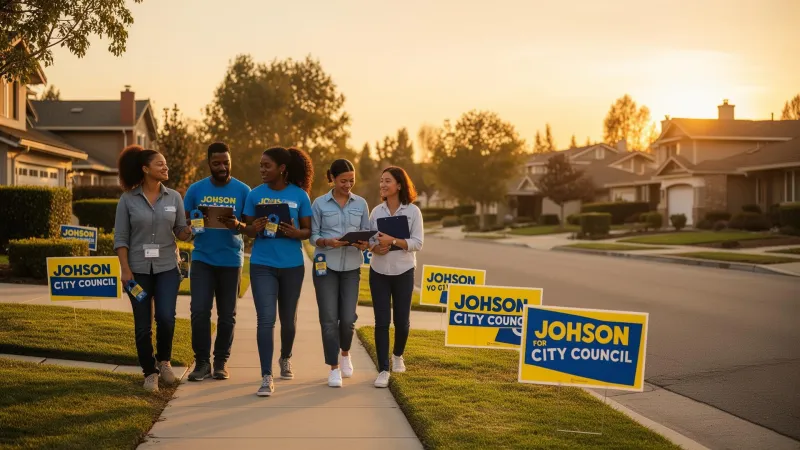
What went wrong? Usually a combination of things. Viral reach doesn't translate to voter turnout infrastructure. A massive online following often skews toward people who don't live in the candidate's actual district, or who are too young to vote, or who are engaged with the content but not engaged enough to actually show up. And the voters who do reliably show up — older voters, frequent primary voters, people who've been voting in local elections for 20 years — often aren't on TikTok at all.
The Policy That Broke the Internet and Passed Anyway
The flip side of this is equally instructive. Some of the most genuinely unpopular policies — unpopular on social media, anyway — pass with comfortable margins because the people who vote on them are a completely different audience than the people who post about them.
There's a reason that zoning changes, local tax measures, and school board decisions often go in directions that seem to shock the online crowd. The people who show up to vote on those things are, demographically and ideologically, not the people dominating your For You page. They're older, they vote in every election including the weird off-cycle ones in February, and they've been doing this long enough that they're not particularly moved by a trending hashtag.
This isn't a knock on older voters. It's actually a knock on the assumption that online noise equals political power. It doesn't, at least not automatically.
What Gen-Z Voters Are Actually Saying About This
Talk to enough Gen-Z voters who've been through a few election cycles and you start to hear a common story. There's usually a specific moment — a race they were certain would go one way based on their feed, that went the other way entirely — that kind of recalibrates how they think about political social media.
"I genuinely thought [a particular candidate] was going to win in a landslide," one 23-year-old voter described in a conversation that's representative of a lot we heard. "Every single person I followed was posting about her. And then she got crushed. I had to really sit with that for a minute."
That sitting-with-it moment is actually important. Because the voters who go through it and come out the other side tend to develop a more sophisticated relationship with political content. They start asking different questions: Who made this? Who is this reaching? What's the actual ground situation versus the online situation?
That's not cynicism. That's media literacy, and it's genuinely valuable.
When Viral Actually Does Move the Needle
To be fair, this isn't a story about social media being politically useless. That would be wrong, and honestly kind of boring.
There are real examples of viral political moments that translated into measurable real-world outcomes. Voter registration spikes after major cultural moments. Fundraising surges that followed specific viral clips. Issue awareness campaigns that shifted polling on specific policies. The 2018 midterms saw record-breaking youth turnout that was, at least partially, fueled by an extremely online political moment.
The difference tends to be in whether the online energy was connected to actual organizing infrastructure. Viral moments that were backed up by voter registration drives, phone banking, canvassing operations, and get-out-the-vote logistics? Those moved the needle. Viral moments that existed only as viral moments? Usually not so much.
The content alone doesn't vote. The person watching it has to.
So What Do You Do With This?
Here's the honest answer, which isn't particularly glamorous: you treat your political feed the way you'd treat any other curated media product. With some skepticism. With an awareness that what you're seeing is a selection, not a sample. And with a genuine effort to seek out information that your algorithm isn't going to serve you unprompted — local election guides, voter turnout data, actual polling from your specific district.
The feed is fun. The discourse is real. The feelings are valid. But none of that is the same thing as the vote, and the vote is still the thing that actually changes anything.
Your algorithm doesn't live in your congressional district. It doesn't pay your rent. It's not going to show up at the polls for you.
That part's still on you.