5 Politicians Who Built Real Movements Without a Trust Fund or a PR Team
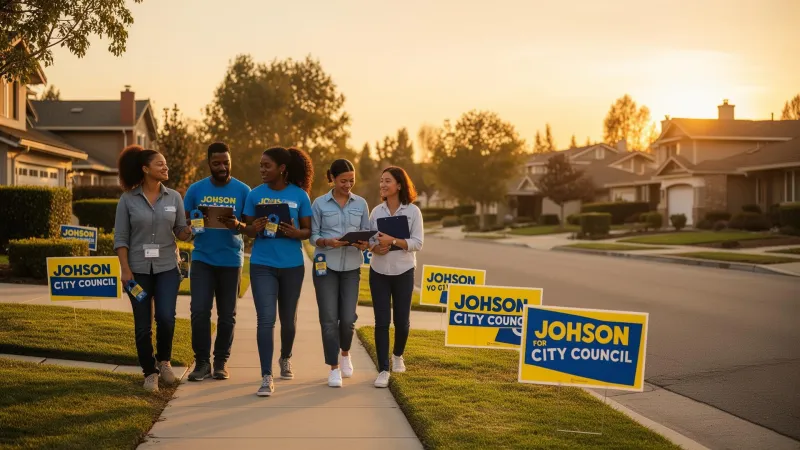
Photo: young diverse political campaign volunteers canvassing neighborhood, via www.localcampaignpros.com
Let's be real — most political social media accounts are painful. The forced memes, the stock-photo energy, the "as a [insert identity here] I believe..." energy. You can feel the consultant fingerprints all over it, and so can everyone under 40.
But every once in a while, a politician actually figures it out. Not by hiring a Gen-Z social media manager to make TikToks (though, hey, sometimes that works too), but by being genuinely present, genuinely responsive, and genuinely willing to engage with people like they're actual human beings rather than a demographic to be harvested for votes.
The politicians who've built real grassroots movements in the last decade share some common DNA. They're not necessarily the most famous names in the room. They don't all have the biggest war chests. But they've figured out something that most career politicians never do: people can tell when you're performing, and they're exhausted by it.
Here are five who got it right — and what the rest of the political world could learn from them.
1. Alexandria Ocasio-Cortez — The Template Everyone Copies But Nobody Matches
Love her or not, AOC cracked a code that political strategists are still trying to reverse-engineer. Before she was a congresswoman, she was a bartender from the Bronx who knocked on doors in neighborhoods that the Democratic Party had largely written off as too difficult to mobilize. She won a primary against a ten-term incumbent with almost no money and a whole lot of shoe leather.
But it's what she did after getting elected that turned a congressional win into a genuine movement. Her Instagram Stories during the early days of the pandemic — casual, unfiltered, filmed from her kitchen while she assembled furniture — felt nothing like political content. It felt like watching a friend process a crisis in real time. Her willingness to engage directly with critics, explain her votes, and admit uncertainty made her feel accessible in a way that's almost unprecedented for a national political figure.
The lesson: Authenticity scales. You can't fake the kitchen table energy, and trying to manufacture it is worse than not having it at all.
2. Cori Bush — Credibility You Can't Buy
Cori Bush's path to Congress runs through Ferguson. She was literally in the streets during the 2014 protests following Michael Brown's death — not as a politician, not as a candidate, but as a community member and activist. Years later, when she ran for Congress in Missouri's 1st district, she had something that no amount of campaign spending can purchase: a track record that her constituents had watched with their own eyes.
Her social media presence reflects that same groundedness. She posts from community events, from town halls, from conversations with constituents that feel unscripted because they are. She's had moments of raw vulnerability — including publicly sharing her experience of housing instability — that would make most political consultants sweat through their suits.
It works because it's real. The community she represents knows her story. There's no gap between the campaign version and the actual version.
The lesson: The most powerful thing a politician can have is a story their community already knows is true.
3. Maxwell Frost — Gen-Z's First Congressman Didn't Wait for Permission
When Maxwell Frost won his Florida congressional race in 2022, he was 25 years old, had been rejected for an apartment because of his credit score, and had been driving for Uber to fund his own campaign. He's also the first member of Gen-Z ever elected to Congress.
Frost didn't win because of party infrastructure — the DCCC was lukewarm on him early in the race. He won because he'd spent years doing actual organizing work with March for Our Lives and had built genuine relationships with young voters who don't typically show up for midterms. He talked to them like peers because he is their peer.
His social media is refreshingly unpolished. He posts about music. He's open about mental health. He engages with critics without being performative about it. He represents a generation of potential politicians who grew up online and understand intuitively that nobody is impressed by a perfectly staged photo op anymore.
The lesson: If you're actually from the generation you're trying to reach, act like it. Stop letting consultants sand down the edges that make you relatable.
4. Stacey Abrams — The Long Game Is a Movement Too
Stacey Abrams lost a governor's race in Georgia in 2018 under circumstances that generated enormous controversy around voter suppression. A lot of politicians would have retreated. Instead, she spent years building Fair Fight Action, registering voters, and doing the unglamorous infrastructure work that most people in politics skip because it doesn't make for great campaign ads.
The result? Georgia flipped in 2020. Two Democratic Senate seats. A presidential win.
Abrams didn't build her movement through viral moments (though she's had plenty). She built it through sustained, consistent engagement with communities that had been told their votes didn't matter. She showed up in places that national Democrats had written off. She listened to what people actually needed.
Her social media presence reflects the same long-game thinking — educational, consistent, community-focused rather than self-promotional. She's more interested in building power than building a personal brand, and that distinction is something voters can feel.
The lesson: Movements are built between elections, not during them. The politicians who understand that are playing a completely different game.
5. Pete Buttigieg — Translating Policy Into Human
Okay, yes, Pete Buttigieg has become a cabinet secretary and a fairly prominent national figure. But his origin story is worth examining. He was the mayor of South Bend, Indiana — a mid-sized Rust Belt city with real economic challenges — and he built a national profile almost entirely through his ability to explain complicated things in plain language.
His Reddit AMAs became legendary. His willingness to engage with hostile questions directly, without deflecting into talking points, made him stand out in a field of politicians who treat every question as a threat to be neutralized. Young voters responded to the sense that he was actually engaging with the substance of their questions rather than performing engagement.
The lesson: Competence is underrated as a political brand. Knowing your stuff and being willing to explain it without condescension is genuinely rare, and people notice.
The Common Thread
Look at all five of these politicians and you'll find the same things: real community ties before the campaign, consistency between the public persona and the private reality, and a willingness to engage with people rather than just broadcast at them.
None of them needed a billionaire patron to get started. None of them manufactured authenticity from a marketing brief. And all of them built the kind of supporter relationships that translate into actual votes, actual volunteers, and actual staying power.
For anyone thinking about running for office — from city council to Congress — that's the blueprint. It's not flashy. It doesn't go viral on day one. But it lasts.