Your Ballot Is Already Decided — The Algorithm Just Hasn't Told You Yet
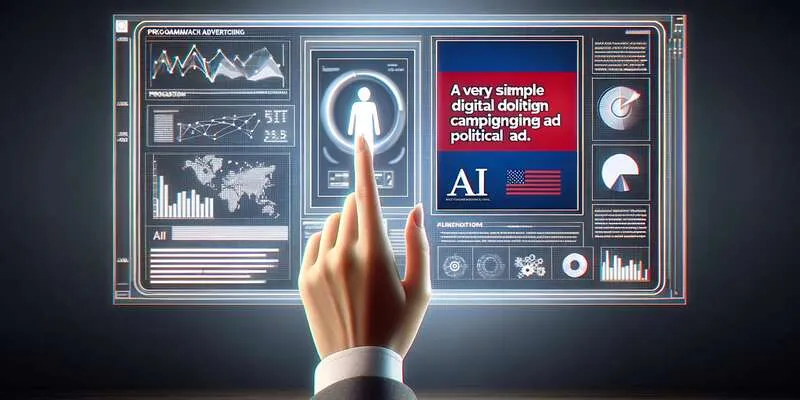
Photo: data analytics political campaign digital targeting technology, via mr.cdn.ignitecdn.com
You scroll past a political ad without thinking twice. Maybe it was about housing costs. Maybe it hit on student loan debt or gas prices or some local zoning issue you didn't know you cared about until five seconds ago. You keep scrolling. No big deal, right?
Except that ad wasn't an accident. It wasn't some campaign intern throwing stuff at the wall. That ad found you because a system — built by data scientists, political consultants, and behavioral psychologists — decided you were exactly the kind of voter who needed to see it. And here's the part that should make you put your phone down for a second: it probably knew that before you did.
Welcome to the actual engine running modern American elections. Not the debates. Not the rallies. The algorithm.
What "Voter Data" Actually Means (It's a Lot)
When campaigns talk about voter data, most people picture some basic spreadsheet — name, address, party registration. That's cute. The reality is way more invasive.
Political data firms are pulling from hundreds of sources simultaneously. Your voter registration is just the starting point. From there, they layer in consumer data — what you buy, what you stream, what magazines you used to subscribe to, what your car says about your income bracket. They cross-reference your social media activity, your location data from apps on your phone, your neighborhood's demographic trends, and even what kind of device you're reading this on right now.
Companies like i360, Catalist, and TargetSmart have built massive voter files — essentially detailed profiles on virtually every American adult — that campaigns rent access to during election season. These aren't fringe operations. They're the backbone of how both parties run ground games and digital strategy at every level, from Senate races down to school board elections.
The result? A campaign can know, with surprising accuracy, whether you're a low-propensity voter who might show up if nudged the right way, a persuadable moderate who leans one direction but could flip, or a locked-in base voter who just needs a ride to the polls.
The Creepy Science of Predicting You
Here's where it gets genuinely unsettling. The profiling doesn't stop at demographics. Modern political targeting uses behavioral modeling — essentially, statistical predictions about what you'll do based on what people who look like you (data-wise) have done.
Researchers have found that things like your music taste, your TV preferences, and even the way you write in online forums can be predictive of political leanings. A 2013 Cambridge study famously showed that Facebook likes alone could predict personality traits with startling accuracy — and personality traits correlate heavily with voting behavior. Cambridge Analytica took that concept and ran with it into notoriously dark territory during the 2016 election cycle, but the underlying methodology didn't disappear when that company collapsed. It evolved.
Campaigns now use what's called a "persuasion score" — a number attached to your voter file that estimates how movable you are and what message is most likely to move you. Are you someone who responds to economic anxiety framing? Social identity appeals? Fear-based messaging? Hope-based messaging? The model has a guess, and it's been trained on millions of data points.
This isn't science fiction. This is Tuesday in American politics.
How It Actually Changes Outcomes
Okay, so campaigns know a lot about you. But does it actually work? Does any of this data stuff translate into real votes?
Short answer: yes, and the margins are the whole point.
In a national election decided by millions of votes, targeting efficiency might not feel dramatic. But in a competitive House district, a state legislature race, or a primary where turnout is 20%, being able to identify your 500 most persuadable voters and hit them with exactly the right message at exactly the right time is potentially the whole ballgame.
Obama's 2012 campaign is often cited as the moment data-driven targeting went mainstream. Their analytics team built models that identified low-propensity Obama supporters in swing states and ran contact programs specifically designed to move those voters to actually show up. The campaign credited the data operation with generating a significant portion of their margin in key states like Ohio and Florida.
Since then, every major campaign has built or bought a version of this infrastructure. The gap between campaigns that invest in data and those that don't has become a serious competitive disadvantage — which is part of why small-dollar grassroots candidates often struggle even when they have genuine public support.
Your Phone Is the Most Important Polling Place Nobody Talks About
The platform shift matters too. Political digital spending has exploded — we're talking billions of dollars across Facebook, Instagram, YouTube, and increasingly TikTok and streaming platforms. And unlike a TV ad that runs for everyone watching the evening news, digital ads can be served to audiences sliced so thin it's almost absurd.
Campaigns can target voters by congressional district, by whether they've previously donated to political causes, by what issues they've searched for, by whether they've attended a protest or a town hall. They can run completely different ads to different people in the same zip code, testing which version drives more engagement, and then automatically shift budget toward the winner. This is called A/B testing, and campaigns run thousands of these micro-experiments during an election cycle.
The message you see isn't the message your neighbor sees. And neither of you will ever know the difference.
So What Do We Actually Do With This?
Look, knowing this stuff exists doesn't make you immune to it. That's the frustrating part. The whole system is designed to feel organic — like you just happened to see something relevant to you. That's not an accident. It's the point.
But there are a few things worth keeping in mind. First, the targeting isn't perfect. Models are probabilistic, not psychic. Campaigns make wrong bets on voters all the time. Second, the fact that a campaign is targeting you with a specific message tells you something — if you pay attention to what they're pushing, you can reverse-engineer what they think your pressure points are. That's actually useful information.
And third — maybe most importantly — this is all happening largely outside of public view, with almost no federal regulation specifically governing political data use. The same privacy conversations we're having about Big Tech need to be happening about political data brokers, and they're mostly not.
Somebody's already built a model of you. They've scored your persuadability, guessed your issues, and queued up a message designed to nudge you in a specific direction. Whether it works is still, technically, up to you.
But they're definitely not leaving it to chance.