Shut Up and Win: The Case for the Three-Word Press Release
Photo: Carole Raddato from FRANKFURT, Germany, CC BY-SA 2.0, via Wikimedia Commons
The most effective piece of political communication I saw in 2026 was a statement that read, in its entirety: "We're focused on voters."
That's it. That was the response to a fairly straightforward question about a fairly substantial story. Four words, two of them contractions, zero information. And it worked, which is the part that should bug everyone.
Let's call the strategy what it is
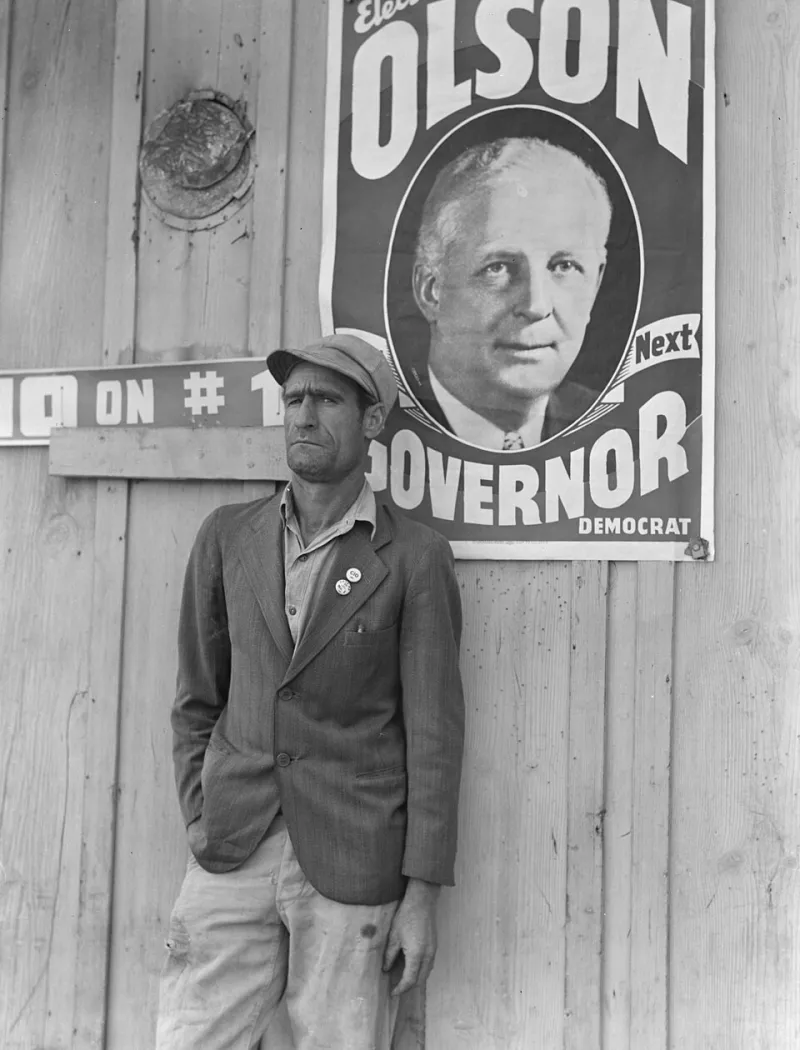
We still talk about this like it's a gaffe. A candidate avoids the press, skips the debate, refuses to say anything substantive, and we describe it as an error in judgment, a failure to connect, a weakness in the campaign.
It's not. It's a plan. It's a cheap, effective, scalable plan that costs one comms person and a Notes app.
Here's the logic. Every unscripted moment carries downside. A bad answer, an off-mic moment, a follow-up question that exposes you haven't read the bill. Scripted moments carry mostly upside — the ad, the post, the crowd shot, the thirty-second clip. So if you strip out the unscripted and flood the zone with the scripted, your expected value goes up. Not because you're better. Because you're removing the coin flips.
That's it. That's the whole playbook. Treat the press like a hostile group chat, mute it, and post your own content where nobody can quote-tweet you into a follow-up.
What the silence is actually protecting
In 2026, the answer was often: a policy vacuum. When reporters couldn't get a candidate on the record, they wrote about the races they could cover, and the candidates who never gave them anything ended up with lighter coverage than the ones who engaged. Not zero coverage — that's the thing nobody realized. Running from the press doesn't get you ignored. It gets you covered with fewer specifics about the very things voters say they care about.
The silence also protected against a genuine risk: local reporters asking specific questions about local money. It's a lot easier to run as a generic outsider shooting at Washington when nobody's asking about the zoning vote or the contract with your cousin's firm.
And to be fair to the campaign side, the press earned some of this. Nonstop coverage of gaffes over substance, hot-take panels on cable, and the flattening of a whole legislative record into one viral clip — that all pushed candidates toward control. You can believe both things: the newsroom baked a cake and the candidate took it and fed it to the dog.
Who pays the bill
Three groups, and none of them are the candidate.
Local reporters, first. Shrinking newsrooms already can't cover every race. Add a refusal to engage and the coverage that survives is thinner, later, and usually sourced from campaign material. That's not journalism, that's a newsletter with a byline.
Challengers, second. A nobody running for the first time needs free attention to be viable. The incumbent or the frontrunner can afford silence. So silence is a paywall, and only the well-funded can afford it.
And voters, mostly. You didn't get a straight answer and you voted anyway. That's not your fault — you had a job and a life and two hours of civic bandwidth per week. But it means a race got decided on name recognition and a 15-second ad, and that's a genuinely worse way to pick a tax commissioner than a boring interview nobody watched.
Why we keep rewarding it
Because most people don't want the interview. They want the vibe. Forty years of political journalists framing the press as the people who catch politicians out has done real damage to trust in the institution doing the catching. So a candidate who blows off the press doesn't look shady to a big chunk of voters. They look like someone who's got better things to do than talk to the media, which is a message that lands like a brick in 2026.
There's also a hard truth here: the interview format itself is broken. Four seconds per answer, a question that's really an accusation, and a follow-up designed to generate a moment instead of a fact. A candidate with something to say can't say it, and a candidate with nothing to say can hide in the format. If anyone's going to fix this, it'll have to start with the people asking the questions.
The 2028 problem
Here's what worries me. The three-word press release is cheap, and cheap things scale. In 2028, expect a whole tier of candidates running as a brand with no accessible human in the middle, pushing out content and dodging every room where the water pressure rises.
You can survive that strategy for a cycle. You can't govern with it. Somebody eventually has to sit in a room, get pressed on a budget, and answer a question that wasn't pre-approved.
So maybe the standard shouldn't be "will you talk to the press." Maybe it's the smaller, harder one: when you're asked something and the answer is uncomfortable, do you say a real sentence or four fake words?
Voters can tell the difference. They just haven't been given the chance very often.